Anatoly Karlin is a blogger, thinker, and businessman in the SF Bay Area. He’s originally from Russia, spent many years in Britain, and studied at U.C. Berkeley. He blogs at The UNZ Review and DaRussophile
Charles’s experience living in London as a child in the 1960’s and an adult in the 1980’s, and Robert’s visit in 2002
Charles’s experiences in New York in the 1980’s and that era in film
The Brownstones of New York and Boston and how they originally started out as single family homes
Art Deco
Mass Transit systems
The demographic transformations of London, New York, and Los Angeles
How mass immigration has led to an increase in the demand for housing in cities
Robert’s recent trip to San Francisco
Chicago’s grid pattern
How Los Angeles started out as car oriented suburbia but latter became denser while not upgrading it’s transit infrastructure
Santa Monica, California and how the 1994 Earthquake transformed the city
The revitalization of downtown Los Angeles
Dallas, Texas and how it’s following the patterns of LA
How whites are moving back to cities while non-whites are moving to suburbs
How single family homes are being replaced by apartments
Why Charles’s views the single family home as the ideal for autonomy of living
How the increase in apartment living coincides with the decline of families
Whether the key issue is density itself or the quality of architecture
The appeal of urban living and why people are willing to sacrifice living space for that lifestyle
The New Urbanist movement which seeks to recreate walkable communities
Robert Stark and co-host Charles Lincoln talk to Augustus Invictus. Augustus Invictus is a libertarian candidate for US Senate in Florida. Augustus is an attorney and community leader in Orlando, Florida. Best known as a radical philosopher and infamous social critic, he is Managing Partner of Imperium, P.A., the law firm he founded in 2013.
Topics include:
The controversies and media coverage of his campaign
The resignation of the Libertarian Chairman of Florida in response to his campaign
Establishment Libertarians who worship corporations, embrace political correctness, and are rigid in their views
Ezra Pound
Augustus’s opposition to Usury
His stance on immigration
The environment and wilderness conservation
Police State abuses
Corporate influence in politics and Citizens United
His stance on trade
His stance on foreign policy
His Paganism and sect of Thelema
His affinity for Ancient Rome A Call for Total Insurrection
Charles Lincoln has a PhD in Anthropology, History, and Archaeology from Harvard University
Topics include:
The breaking down between the distinction between urban and rural societies
Aldous Huxley’s Brave New World predictions about how people will live in the future
How cities originally played a role of middlemen in an agricultural economy
The destruction of the small village farming model
The rise of dense cities in the late 19th and early 20th Century
The role that immigration played in the growth of American cities
E. Michael Jones’s The Slaughter of Cities: Urban Renewal As Ethnic Cleansing
How forced integration pushed the working and middle class out of cities
The rise of suburbia and exurbia
Whether it’s possible to have a thriving middle class within a dense city(ex. NY in the 1950’s, Japanese cities)
Why Charles does not view density as a source of inequality but rather a symptom
How urbanization has led to a lack of self sufficiency
How the ideal place to live for those with wealth has access to both cities and open space
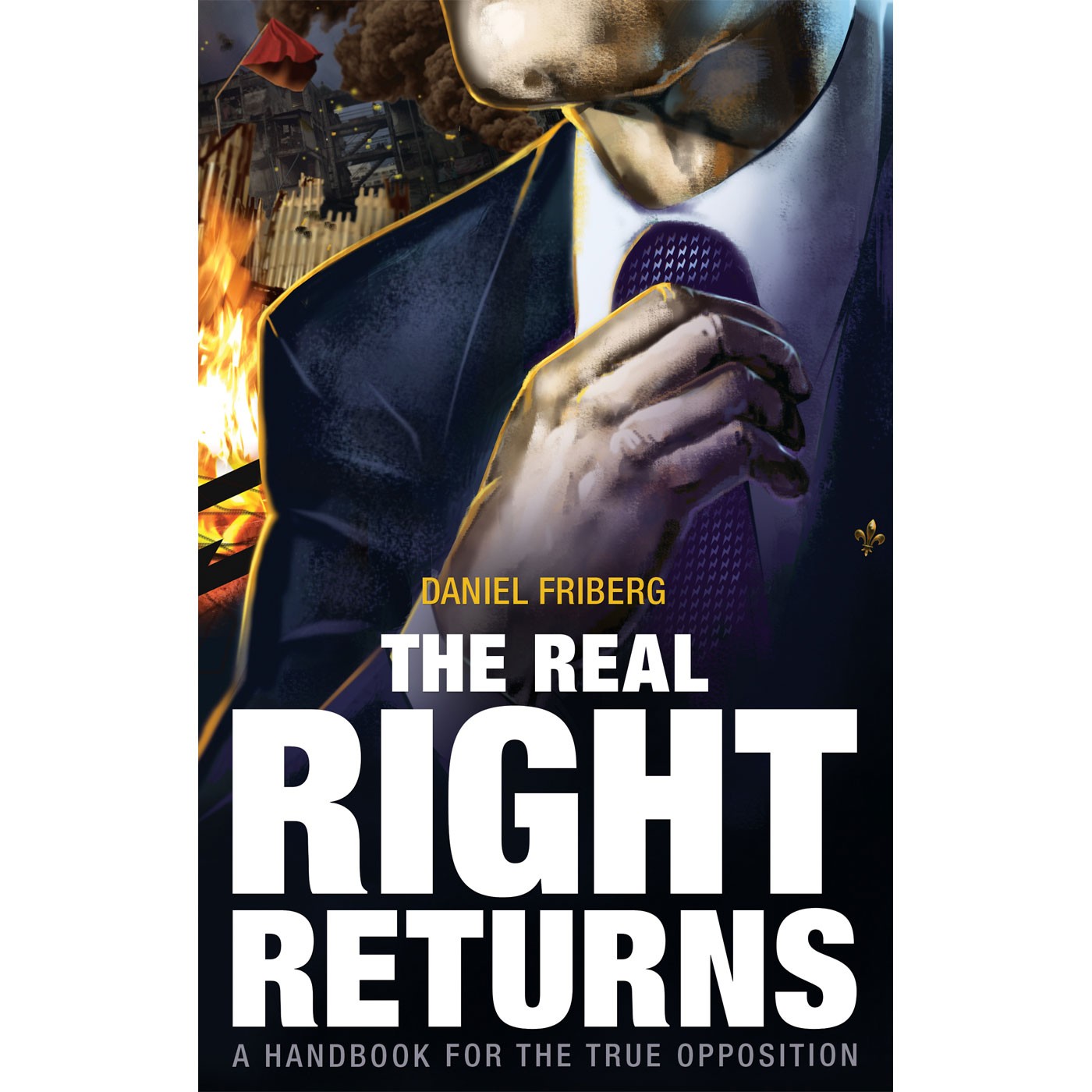
Daniel Friberg, MBA, is CEO of the Swedish mining corporation Wiking Mineral and was a founding member of the Swedish metapolitical think tank, Motpol. He has a long history in the Swedish opposition, and was one of the founders of Arktos. His new book is The Real Right Returns (Hardback) – Arktos
Topics include:
The decline in the Swedish education system
The immigration situation in Sweden and Europe
How US and NATO foreign policy destabilized the Middle East
How American influence threatens European independence
How the establishment is loosing it’s intellectual legitimacy
The importance of metapolitics
Defining the right and left
The left’s cultural war of conquest
The outsourcing of manufacturing
How wealth is being distributed from the middle class to the financial elites and foreign proletariat
The book’s chapter on gender
Political Correctness and Censorship in Sweden
The Philosophical questions regarding life and death
The Suffering God and the Culture of Death
Confronting one’s own mortality
How the onset of adolescents and sexualization changes ones view towards life
Andy’s book Considering Suicide
The book’s essay “The Street Hardly Understands” about T.S. Elliot Duran Duran’s New Moon on Monday and it’s esoteric lyrics
The shallowness of Christian Hollywood and why Christian art doesn’t always have to be wholesome The Black Pill and how nihilism can be liberating
Robert Stark and co-host Charles Lincoln interview John Médaille. John is a retired businessman who teaches in the Theology and Business departments at the University of Dallas, and is a senior scholar with the Intercollegiate Studies Institute. He is a veteran of the Vietnam War, a former city councilman, and the author of two books, “The Vocation of Business: Social Justice in the Marketplace” (2007) and “Toward a Truly Free Market: A Distributist Perspective.”
Topics include:
The culture and economy of Texas
How a Free Market is defined by a high degree of competition and participation
How capitalism is not a truly free market because it leads to consolidation
How conservatism became redefined as corporate global capitalism instead of local control and tradition
The need to end corporate subsidies and regulations favoring large corporations
Wal-Mart and the hidden inefficiency of our distribution system
Monopolies in the media and communications
Anti-Trust Laws
Banking and the need to end to big to fail banks in favor of localized banking Georgism and the theory on land speculation
Why John favors a wealth tax over an income tax
How the breaking up of large estates led to the economic success of Taiwan, Japan, and South Korea
How those examples differ from Communist land confiscation in Zimbabwe and the Soviet Union
The Emilia-Romagna Cooperatives in Northern Italy
Free Trade deals and how they destroyed small businesses and manufacturing
Healthcare reform: licensing, guilds, and insurance