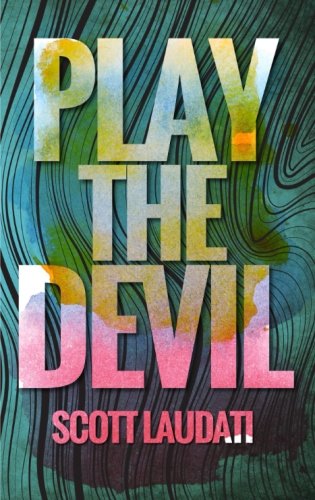
Scott’s book, Play The Devil
His poetry book, Hawaiian Shirts In The Electric Chair
New Jersey, College Education, and Politics
Jack Kerouac, Hunter S. Thompson, Sam Pink
Doldrum suburbs,mundane existence, and nihilistic working
Millennial economic despair
Scott’s poem about being 30, “My 30th Birthday,” and the Quarter-life crisis
New York vs. LA, Youth Culture, expensive living
Trump, Hillary, Alt-left positions
Scott’s music, American INC.
Scott’s music videos, “Stony Hill,” “A Garden East Of Eden.”
Animals and pets, Dogs
“Waiting In Line for the NOFX Book Signing.”
“Super Mario Brothers, Reptilian Rape and the Hollow Earth Theory.”
Tim and Eric – Film School (Lobsters on film)
Punk bands
Staring into the Sun, Sungazing, cover art
Postcard art
The publishing industry and self publishing on Lulu
Robert Stark and co-host Pilleater talk to Anatoly Karlin. He blogs at The Unz Review
Topics include:
Anatoly’s article at the Unz Review about his American Decade
Why Anatoly is leaving the United States and going back to Russia
How the United States is becoming more like Europe
T.R. Reid’s book The United States of Europe, where he argued that the EU was emerging as a superpower rivaling the US, but has latter been disproved
How during the Bush era Americans perceived Europeans as “Cheese Eating Surrender Moneys,” but latter Sarkozy became the architect of the war in Libya, and arming Syrian rebels
Another element of America’s Europeanization is the decline in social conservatism, the surge in support for gay marriage, and drug legalization
Anatoly’s political views, which are fairly socially liberal(except for rejecting political correctness, and radical feminism), economically centrist, and closest to Rabbit’s AltLeft U.S. Millennials More Likely to Support Censoring Offensive Speech, especially among university students who are the future elites
The decline in American fertility rates toward European levels
How American politics now resembles Europe in the sense that there are five distinct blocs: Clinton democrats, Sanders socialists, Rubio/Bush etablishment conservatives, Cruz Bible-bashers, and Trump nationalists.
Anatoly’s pre election prediction article US Elections 2016: Let’s MAGA, Not War, and Trump’s support in the rust belt
Trump’s economic policies as a hybrid of supply side economics, and economic nationalism, and the similarities to Putin’s economic policies in Russia
The GINI index of income inequality
The pros and cons of economic automation, and the basic income
Transhumanism, Zoltan Istvan, and his book The Transhumanist Wager
The Bay Area where Anatoly spent most of his time in the US, and how it’s pretty much ideal, but also the most expensive macro-region of the US
California is also home to Ron Unz, Steve Sailer, as well as the “Alt Left” movement(the tiny group of thinkers combining leftist economics with HBD, sane views on gender relations, and a penchant for futurism )
The futurist scene in the Bay Area including Scott Jackisch’s Bay Area Futurists meetup, Health Extensions Salons, Mike Johnson’s Qualia Research Institute, Effective Altruism, and the “techno” faction of NRx
Mass Transit, Bay Area Rapid Transit, how older cities tend to have more integrated transit systems, and why conservatives oppose mass transit
Global Warming, Swedish scientist Svante Arrhenius who discovered climate change, debunking climate change deniers, and whether it will benefit arctic regions such as Russia
Observations on other American cities including Las Vegas, Los Angeles, Chicago, New York, Washington DC, and Pittsburgh
Anatoly’s experience ridding across the nation on Amtrak
Architecture: Skyscrapers, Brutalism, architect John Portman’s 70’s Neofuturism, and Rabbit’s ideal city based on the film Logan’s run
America’s great wilderness and National Park System
How the polls were inaccurate
The shy Trump voter affect in the polls
Trump’s election as a referendum against globalism, political correctness, and the establishment
Trump as a repudiation of Conservatism INC
Trump’s success winning blue states in the rust belt by appealing to working class white voters
How despite media hysteria of racism, Trump’s share of Minority voters was slightly higher than past Republicans
How working class whites have been economically marginalized by both parties, and culturally marginalized by the left
The new Alt Left Meme “Class Cuck”
The relationship between class and race, as middle class whites are being pushed down to the economic level of non-whites
The importance of holding Trump’s feet to the fire
Bay Area Guy’s article Election Musings
Rabbit’s article Last Minute Reflections On a Dime Store Election
Ryan Englund’s article Triumph of the Iron Heel, about how Hillary is the candidate of war, SJW culture, and neoliberal economics
How despite Trump’s flawed support for tax cuts for the 1%, he is addressing immigration and outsourcing which are major causes for income inequality Bernie Sanders Statement on Trump, where he states he is willing to work with Trump on issues that help working families
Trump’s non-interventionist statements, and whether he will pick Neocon John Bolton as Secretary of State
European Nationalist adopting left positions on economics and social issues, and how Trump is adopting that strategy to a degree
Ticket splitting voters who supported Trump as well as progressive ballot measures, such as raising the minimum wage, and legalizing marijuana
Thanks to Trump The Trans-Pacific Partnership is dead
How unlike the Alt Right, the Alt Left is divided over the election, with some supporting Trump, some Jill Stein, and some Hillary Clinton
How the main battle in the future will be Nationalism vs. Globalism
Robert Stark and Alex von Goldstein talk to Director and Screenwriter Matthew David Wilder
Topics include:
Matthew’s background, growing up in a trailer park in Des Plaines, Illinois, studying theatre at Yale, and his mentor Peter Sellars
Matthew’s first major project was writing for Clive Barker’sThe History of the Devil
Matthew’s work with Oliver Stone on a film about the war on terror right after 9/11 which was never released
The film Dog Eat Dog, staring Nicolas Cage and Willem Dafoe, written by Matthew, directed by Paul Schrader, which will be released to theatres next month
Matthew directed, and wrote Your Name Here, staring Bill Pullman, which is a surreal dramatic fantasy biopic loosely based on the life of Philip K. Dick
Director Paul Schrader, how he inspired Matthew as a screenwriter, and his concept of the monocular film, which is one protagonist alone against the world
The notion of God’s lonely man, and how Matthew wrote a one act play in college by that name Film noir, the aesthetic, the story of fate hanging over the characters, and the Neo-noir genre
Matthew’s interest in combining genres, rather than sticking with one particular one Brett Easton Ellis praises Matthew in his interview with Paul Schrader
Matthew’s upcoming film Morning Has Broken, about a young runaway girl who moves in with a seemingly harmless, elderly, Academy Award-winning songwriter, staring Lydia Hearst and Peter Bogdanovich
Matthew’s point as a filmmaker, that what influences you is not the most obvious
The importance of breaking taboos, and taking the audience out of their comfort zone
The upcoming film, the Looking Glass, written by Matthew, staring Nicolas Cage, about a couple who buy a desert motel where they find out that strange, mysterious events occur
The film is inspired by a story of a motel owner who watched guest have sex through peep holes, and David Lynch’s film Lost Highway
Mid-century Roadside Architecture and Vintage Vegas
Matthew’s political views, how he identifies with the left on the hard issues, but is critical of the micro-issues and political correctness
Alex’s point that troll culture is a form of critiquing society, and how that’s lacking in Hollywood today True Detective
LA culture, vapid conversations in coffee shops, obnoxious roidheads, and capturing LA in film
Matthew’s experiences directed a play at CalArts, and his observations of young actors wanting the celebrity status more than valuing the content of the work
The shortened attention span and how it effects our culture
Alex’s point that there is no longer a mainstream culture, and people have the freedom to find their own creative niches
Robert Stark joined with Rabbit and Krishan Madan interview Laura Foote Clark. Laura is the president of GrowSF, which advocates for affordable and market rate housing in the San Francisco Bay Area.
Topics include:
The Bay Area’s lack of affordable housing
How the housing crisis particularly effects millennials
How integrated public transit provides better access to affordable housing
The severity of the housing crisis, and how a massive increase in housing is needed just to sustain current demands
The miss conception that there is no space to grow in San Francisco, and the twitter series wasteOfUrbanSpace
Mega Developments in the Bay Area, and Laura’s point that focusing on specific projects can distract from the overall housing shortage
Where to build new housing SF grants density bonuses to affordable housing developments
Micro Apartments What Silicon Valley Would Look Like if Tech Companies Built Themselves Cities
Laura’s point that if the Silicon Valley became a more urban environment it would ease the demand for housing in San Francisco
The role that suburbs play in the Bay Area’s housing shortage
How the lack of new housing in cities encourages suburban sprawl
The trend in preference for urban over suburban living among millennials
How Environmental organizations such as the Sierra Club are divided on the housing issue Bay Area’s Greenbelt Alliance and New Urbanism California Proposition 13 Proposition C: San Francisco Affordable Housing
Rent Control
Why Laura would like to see a unified zoning plan for the Bay Area
Whether there is a limit on how many people the Bay Area can accommodate
How the housing issue is the main political divide in the Bay Area
Krishan’s point that tax cuts effect the rich, welfare the poor, but housing can be the political issue of the middle class
The importance of getting involved in local politics
Robert Stark and co-host Alex von Goldestein talk to Ray Sawhill. Ray is a retired journalist who lives in Santa Barbara, CA. He blogs at Uncouth Reflections as Paleo Retiree
Topics include:
Ray’s career as an Arts, Culture, and Film journalist at Newsweek
How Ray stumbled into journalism, and how that was not his original passion in life
How artist and writers often get into journalism to make a living
The era of the journalist as the gatekeeper
Censorship in journalism
How the internet is changing journalism
The effects of the internet on cultural innovation
How the internet both enables creative types and non conformist to get their views across, while enforcing conformity for the rest
The impacts of the internet and social media on millennials
The internet and the concept of infinite knowledge
Ray started online blogging at 2Blowhards, because he wanted a platform for people with interesting cultural views who did not embrace the political correctness of the culture scene Arts & Letters Daily
Ray writings for Salon.com, how he interviewed Roger Scruton, and Thomas Sowell, and how Salon was much more open minded back than
The concept of good taste, and Ray’s observation that the wealthy and cultural elite form their taste in consensus
Ray’s point about people who travel is that they don’t come home and say why doesn’t their home town resemble the places they visit
Ray’s involvement the Punk Rock scene in New York in the 70’s and 80’s
How the Avant Garde was a product of technological limitations
The yippie movement in the 60’s as a precursor to the Alt Right troll culture
How the left counter-culture got absorbed into the establishment and the Alt Right is the new counter-culture
How the culture has stagnated and people are looking to the past for inspiration
Ray and his wife Polly Frost co-produced a webseries THE FOLD
Vaporwave & MACINTOSH PLUS
Sam Hyde’s new World Peace show on Adult Swim
How the 1970’s are considered to be the peak of American Cinema
Films including, Taxi Driver, Dirty Harry, and Falling Down
How art should transcend politics
Alex’s ideological and philosophical journey
How Alex’s political views are where the dissident right meets the radical center
Alex’s upcoming podcast “The Lord of the Gadflies”
How Alex defines liberalism as modern society, a mutable force with different layers
America’s cultural homogenization
The pros and cons of individualism
How our world is at a point of disintegration(the Kali Yuga) and we are at a void
Why Alex supports Donald Trump primarily as a metaphorical symbolic figure against the globalist establishment
Donald Trump, “New York values”, and how he is searching for values of the American people
Radical Centrism, which is where the left and right overlap against the establishment
How giving out information is often more effective than pushing an ideological agenda
Alex’s view that it is important to maintain a European demographic majority, but rejects crude racial thinking such as disliking a person because of their race
The Red Pill, Blue Pill, Iron Pill, Bread Pill(Christianity) Yellow Pill(Libertarianism, Anarchism), and Black Pill
How the Red Pill is the rejection of the dominant values of society
How with the Red Pill one must develop their own world view and perception of the truth
How the Red Pill leads to either the Iron Pill, which is self improvement and self realization, or the black pill which represents alienation, nihilism, and despair
Christianity, Catholicism, and Spirituality
The Millennial generation, and how they are unique in the sense they were spoiled growing but now face a dire economic situation
The appeal of Bernie Sanders to Millennials
The NEET Phenomenon
Gammergate
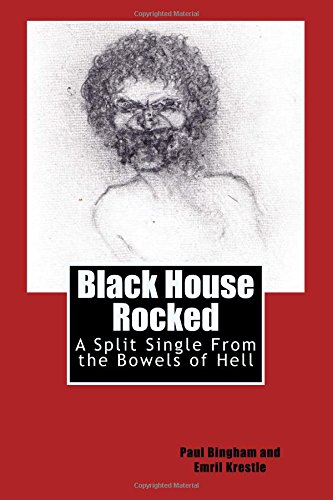
Paul’s Novel Black House Rocked which Robert interviewed Paul’s co-author Emril Krestle about
How almost everything in the story was based on real life events
How the protagonist’s story was inspired by a friend of Paul’s who was falsely convicted of Child Molestation
Why Paul picked a character who was at the bottom of society
How Paul see’s his characters as willing to pay the price for their qualities
The cultural and political topics covered in the book
The setting the book, an economically decimated community in the Ozarks
The Fabian concept of a commuter town which led to modern lifeless bedroom communities
Why the culture of Flyover country should not be fetishized
How despite regional differences the media sets the culture and values in America
Paul’s view that the Alternative Right tends fosters a critique of society without producing any goals or culture The Poet & The Cat, how Paul gives Robert credit for it’s inception, and production, and how he wrote the script when he was drunk, broken down, in the middle of the night James O’meara Reviews The Poet & The Cat
The writer Taylor Caldwell
How the theme of theme of nihilism and viewing society as empty is nothing new(ex. Dostoevsky) Cicero
The concept of dying with honor
How the bloodshed and violence of the middle east has produced great poetry and literature
Saddam Hussein’s literary work and why Paul want’s to see it translated into English and made widespread
Black humor and finding humor in the worst situations
Paul’s theory of generations; Millennials versus the younger generation who are still in their teens
How the 1980’s was the last decade of cultural innovation in music
How Rap has always been about selling out since it left the streets
The genre of angry rock in the 90’s that died off after the Columbine Massacre
James O’Meara view of acceptable versus unacceptable homosexuality
Paul’s view of the German band Rammstein as an example of unacceptable homosexuality
John Houston’s critique of Tennessee William’s play The Night of the Iguana from his memiors
The “Wiggerfication” of Country Music and Rednecks
How the lack of real life experiences leads to the sterility of the culture
The film Winter’s Bone which is set in the Ozarks like Paul’s book
How Paul views Robert Stark as one of the few truly independent journalist